

Smarter Subfloor Bonding Speeds Up Luxury Queenstown Build
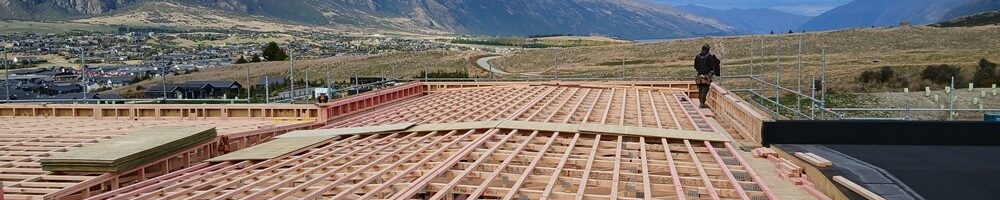
On an exposed architectural build at Jack’s Point, Queenstown, Soudabond Subfloor cut the subfloor gluing time by 20 to 30% and replaced boxes of adhesive cartridges with a single, faster system. This is how the adhesive foam performed on a nearly 500m² home where more than 220 plywood sheets had to be glued and fixed before the torch-on membrane could go down.
Key Takeaways
- Soudabond Subfloor sped up the subfloor gluing process by 20 to 30% on a nearly 500m² Queenstown build.
- One 750ml can replaced up to 12 traditional adhesive cartridges, cutting waste, clean-up and storage on site.
- The adhesive bonded reliably to damp and frozen timber, letting work continue through cold, wet Queenstown conditions.
- Long-handled guns let the builder apply adhesive standing upright, reducing bending and strain when working at height.
- Builder Tom Dagg of THD Building Ltd said he would use it again, with the biggest gains on larger jobs.
A Demanding Roof On An Exposed Queenstown Site
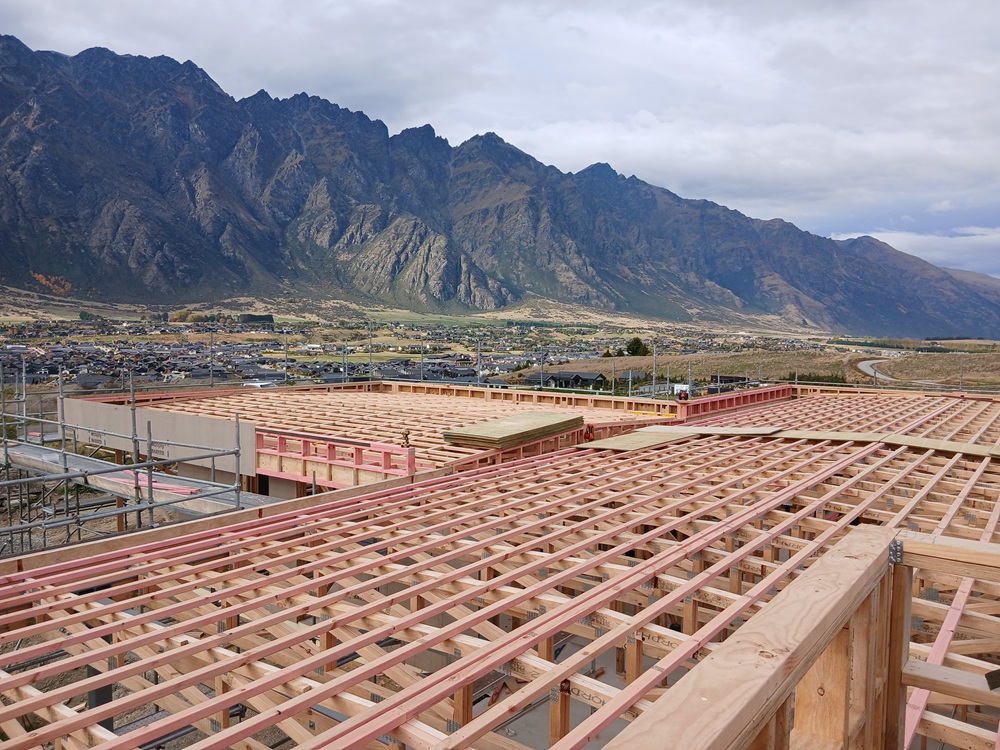
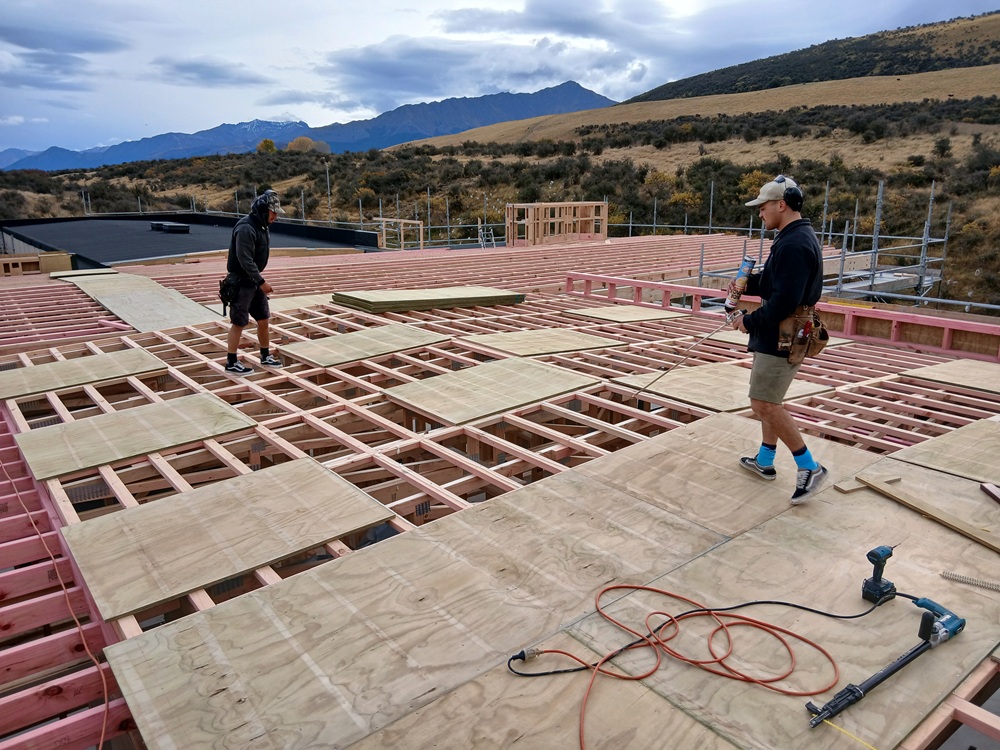
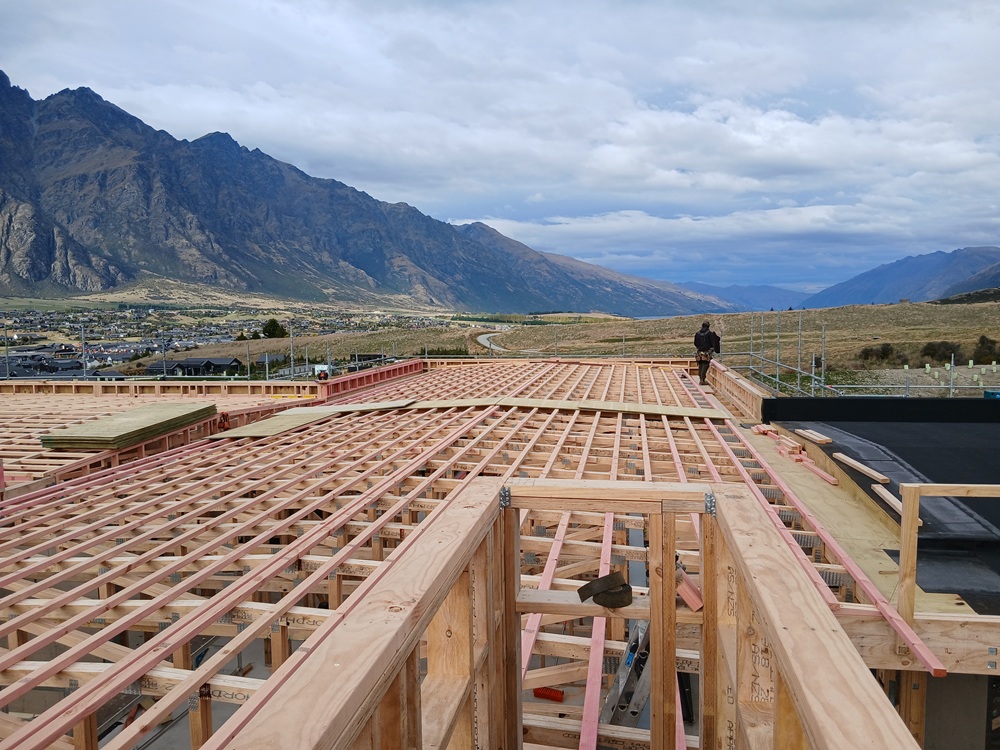
Roofing a nearly 500m² architectural home in Queenstown is no small task. On this Jack’s Point build, more than 220 plywood sheets had to be glued and fixed before the torch-on membrane could be applied, traditionally a labour-intensive process involving endless cartridge changes and hours bent over on the tools.
“This is a high-end house set on nine acres in beautiful Jack’s Point,” explains Tom Dagg of THD Building Ltd, tasked by Toitoi Residential with using the product on the build. “It’s designed to blend into the landscape and has a low pitched three-degree roof that is fully enclosed and hidden by stone and steel parapet walls.”
One Can Replaces Up To 12 Cartridges
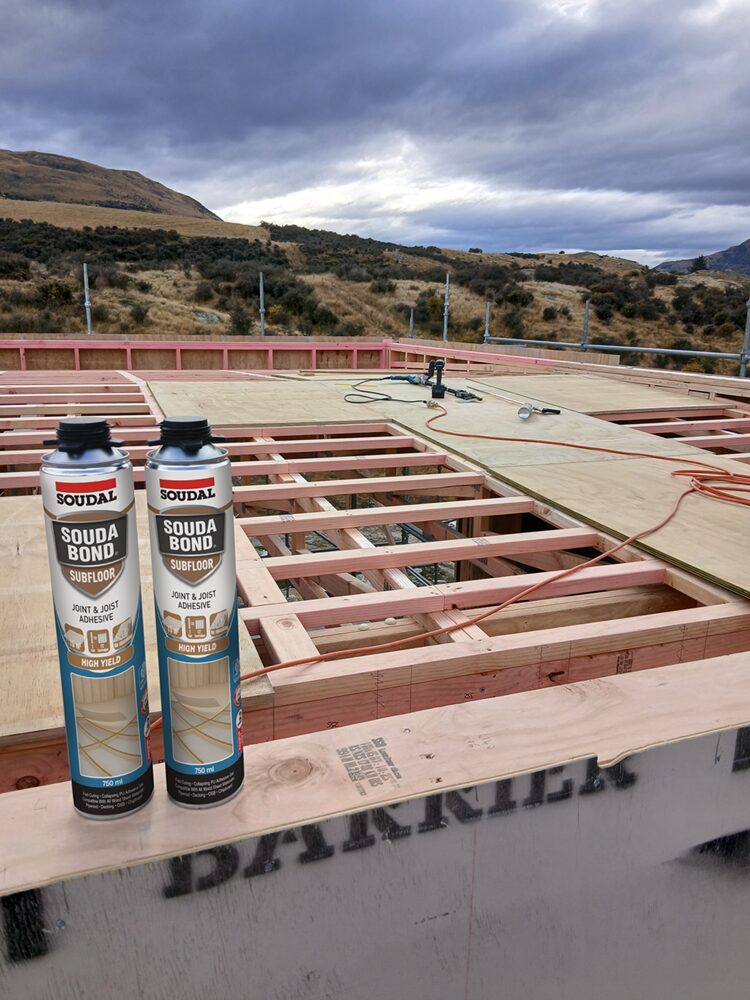
When Wanaka-based merchant Lays Fasteners introduced Soudal’s new Soudabond Subfloor adhesive foam to the project developer, the efficiency gains stood out immediately. One 750ml can replaces up to 12 traditional adhesive cartridges, cutting application time, waste and clean-up on site. Soudabond Subfloor sits within the wider construction adhesives range and is applied with a long-handled gun supplied in 300mm, 600mm and 1m lengths.
After seeing the product’s speed and performance first-hand during a Soudal-led training session, Lays’ Business Development Manager Matt Welsh loaded a long-handled gun and several canisters into his ute and began demonstrating it directly to customers. When he showed it to the Jack’s Point project team and explained the potential time savings, they ordered three boxes on the spot.
“Honestly it’s been a big hit,” Matt says. “The building industry is funny, when a new product comes to market, some people are a little hesitant and stick to what they know. But there’s 12 tubes of one or two-hour cure in this. Cost saving wise, it’s huge. Also the efficiency gains and how quickly you can apply it is next level. It’s a no-brainer swap out if I’m honest.”
Faster Gluing, Less Bending On Site
Tom found the product proved itself quickly in real-world conditions.
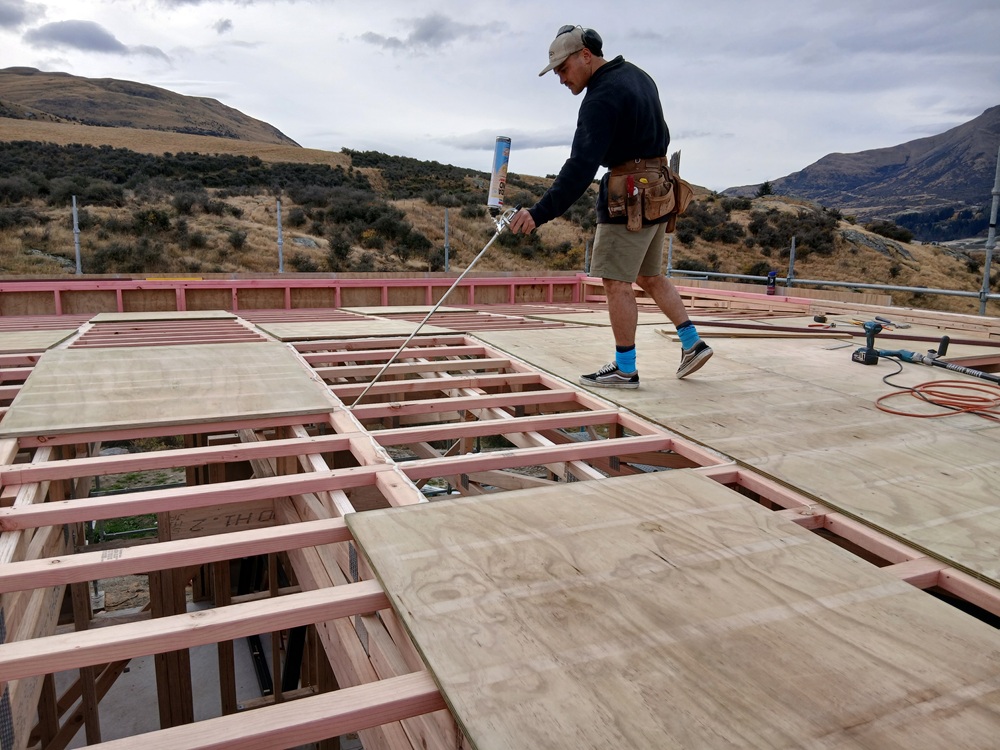
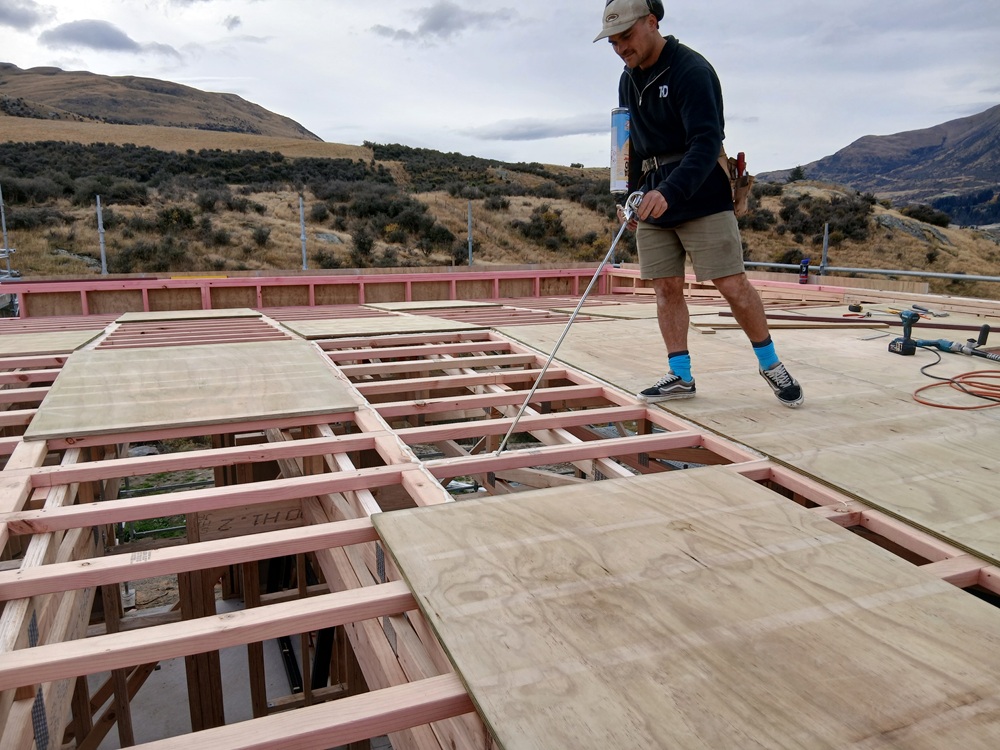
“Using Soudabond Subfloor sped up the gluing process by 20 to 30%. The bigger the job, the more you will see your labour costs decrease,” he says. “I found the product a lot easier to use than traditional tube and caulking gun glue. The long handle is great as it gives more reach and saves you bending over all the time, which is handy when working from height on a roof.”
“It is definitely faster per sheet to glue and there is less time spent changing cartridges. It has also reduced waste as there are far fewer empty cartridges on site. This means less mess and a shorter clean up time.”
While the shorter 300mm and 600mm guns suit factory environments assembling flooring and roofing cassettes, the 1m gun lets builders apply adhesive while standing fully upright, making large-scale flooring and roofing jobs much easier on the body. For Matt, an ex-builder himself, that ergonomic gain reflects a broader shift in the trade. “I follow markets all over the world and it’s about time New Zealand got a product like this.”
Why It Bonds Where Solvent-Based Adhesives Struggle
Unlike traditional solvent-based flooring adhesives, Soudabond Subfloor bonds tightly to damp, wet and even frozen timber, an advantage in harsh winter environments like Queenstown where frost and moisture are part of daily life on site.
Typically, solvent-based adhesives will cure but will not bond properly if the moisture content is too high. As the timber dries out over time, it moves as it shrinks, which leads to squeaky floors. Soudabond Subfloor is dispensed as a foam before collapsing into a high-strength gel. Ten to 15 minutes later, it expands slightly to fill gaps and create an optimal bond across the substrate. For builders, that means less waiting around for timber to dry out before work can continue.
“Any merchant in the building industry selling glues and adhesives should definitely have this in their shop,” Matt says. “All factories building frames and trusses, this should be their default product, all day long. And it’s a no-brainer if you’re doing second storey floors where you don’t want floors to squeak. It’s far superior to all other subfloor adhesives. I’d use it on the roof as well.”
Alongside the efficiency gains, the product reduces cartridge waste, needs less storage space on site and is solvent-free and low VOC, benefits Tom says are increasingly important on modern building sites.
Asked whether he would use it again, Tom’s answer is clear. “Definitely. It saves time, is easier to use and apply, there is less mess and it bonds well. What’s not to like? You won’t be disappointed, especially if it’s a bigger job. Your back will thank you.”
Soudabond Subfloor: Key Advantages
- One 750ml can replaces up to 12 traditional adhesive cartridges
- Faster application and reduced cartridge changeovers
- Only requires a 10mm bead, which can be pre-set on the gun
- Long-handled guns reduce bending and physical strain
- Bonds to damp, wet and frozen timber
- Also suitable for plywood, OSB, particle board, concrete, metals, masonry, stone and plaster
- Can be applied at temperatures between -17°C and 35°C
- 10-minute open time allows repositioning and adjustment
- Reduced waste and clean-up on site
- Reusable canisters when maintained correctly
- Solvent-free and low VOC
- Reduced storage space compared to traditional cartridges
Interested in faster, cleaner subfloor bonding on your next build? Read the full Soudabond Subfloor product details, or use the Soudal Stockists page to find your nearest store.
Interested in enhancing your construction projects with Soudal adhesives? Contact us today or find a stockist near you.
FAQs
How can you speed up subfloor gluing on a large build?
Switching from individual adhesive cartridges to a gun-applied adhesive foam removes most of the stop-start of changing tubes. On this Queenstown build, that change sped up the gluing process by 20 to 30%, with the biggest savings on larger jobs.
Why do timber floors squeak, and how can you avoid it?
Squeaks usually start when an adhesive cures but does not bond properly to high-moisture timber, so the boards move as the timber dries and shrinks. Using an adhesive that bonds to damp timber, as the team did on this build, helps lock the floor down and is especially useful on second-storey floors.
Does cold or wet weather affect subfloor adhesives?
It can, as many solvent-based adhesives will not bond well when timber is damp or frozen. On this exposed Queenstown site, where frost and moisture are part of daily work, the team used an adhesive rated to bond to wet and frozen timber so they could keep working through winter conditions.
Is switching to an adhesive foam worth it for builders?
For this builder it was, with one 750ml can replacing up to 12 cartridges and cutting waste, clean-up and storage on site. As with any new product, the gains are clearest on bigger jobs, which is why the team rated it a straightforward swap.
How does a long-handled adhesive gun help on site?
A long handle lets builders apply adhesive while standing upright instead of bending over each sheet, which matters when gluing a large area or working from height on a roof. On this project it reduced strain and helped speed up application across the more than 220 plywood sheets.