

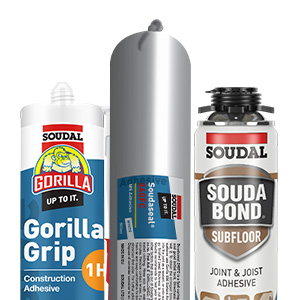

Construction Adhesives & Sealants
Construction adhesive and sealants from Soudal bonds both structural and non-structural building materials on site. These cover expanding PU adhesives, solvent-based grab adhesives, subfloor adhesive, and chemical anchoring systems. The range is built for New Zealand trade conditions, from BRANZ Appraised PU-based adhesives, through to seismic-rated anchoring adhesives for concrete fixing. Cartridge, sausage, and bulk-can formats suit everything from a single fix-up to a full subfloor install.
Grab strength that holds from the first minute to the last fixing.
PU adhesives grip and expand slightly as they cure, giving strong initial hold on timber, and masonry without mechanical fasteners, while solvent-based grab adhesives are formulated for wallboard, plasterboard, and general trade fixing where a faster initial grab is needed. Anchoring adhesives are tested for structural fixing into cracked and uncracked concrete, including seismic-rated options for close-to-edge fixings. Not sure which cure time or format suits the job? See our bonding solutions guide, or browse the full Adhesives range for wood, specialty, and industrial alternatives.
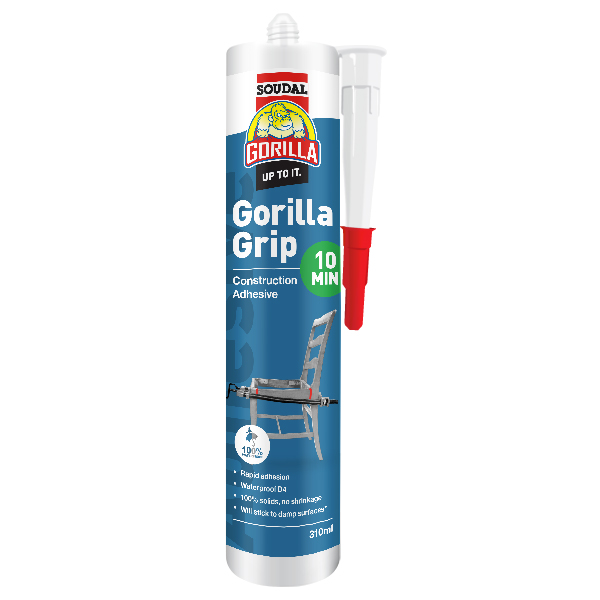
GORILLA GRIP 10 MINUTE CURE
- 310ml, translucent, 19288
- 10 Minute cure
- Paintable
- Solvent free
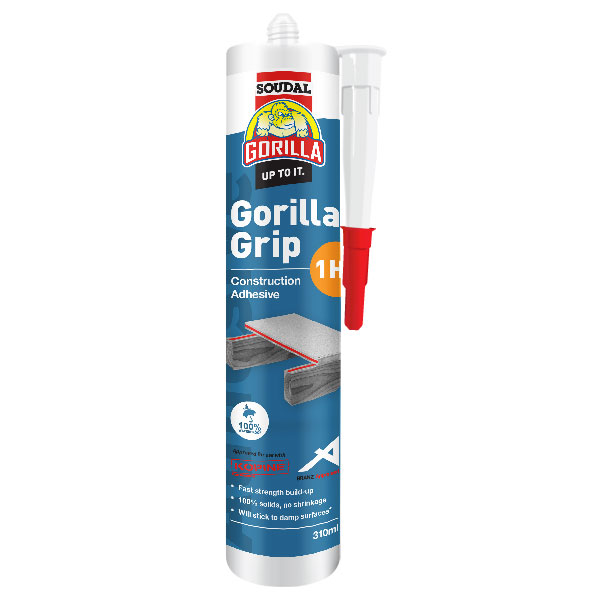
Gorilla Grip 1 Hour Cure
- 310ml, translucent, 20075
- BRANZ Appraised
- Expands as curing
- Solvent free
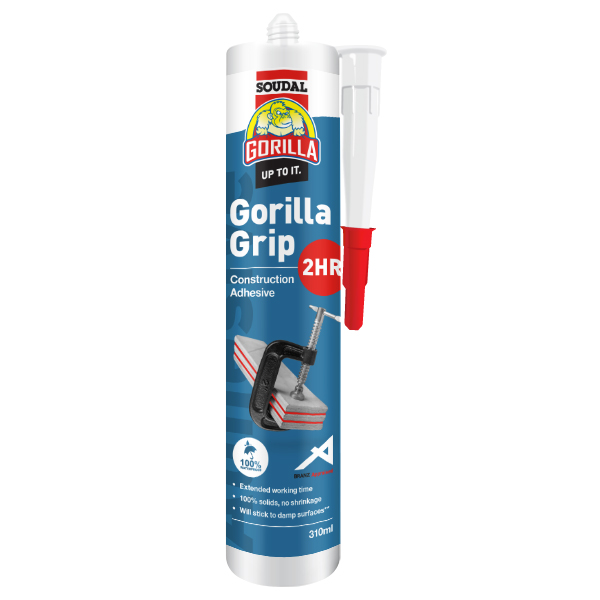
Gorilla Grip 2 Hour Cure
- Multiple sizes, translucent
- BRANZ Appraised
- Expands as curing
- Solvent free
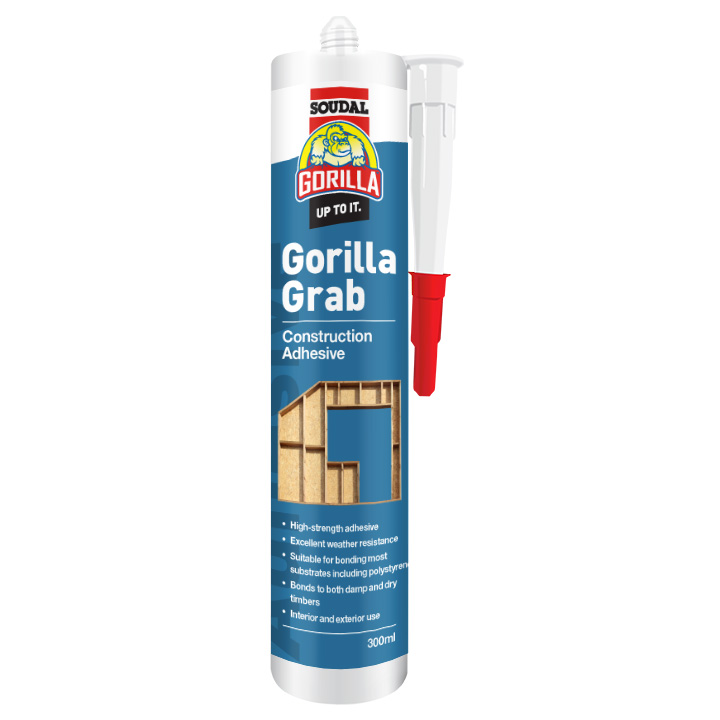
Gorilla Grab Construction Adhesive
- 300ml 20274, beige
- Polystyrene safe
- High strength
- Solvent-based
- Suitable for wallboard, plasterboard, metals, timber and flooring etc
SOUDABOND SUBFLOOR
- 177486, 750ml
- Excellent initial bond
- 1 can replaces at least 12 cartridges of construction adhesive
- Adheres to wet or frozen timber
SOUDABOND SUBFLOOR GENIUS
- 177485, 750ml
- Excellent initial bond
- With our revolutionary genius application technology
- Adheres to wet or frozen timber
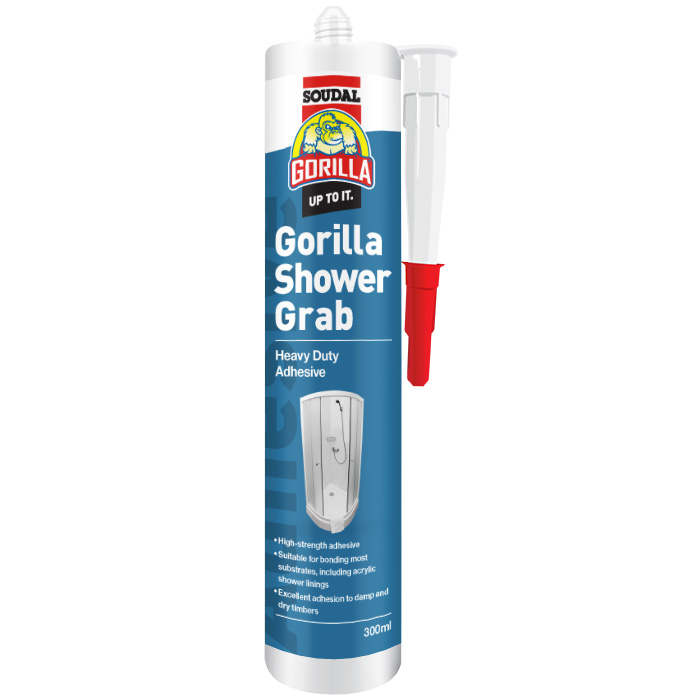
Gorilla Shower Grab Heavy Duty Adhesive
- 300ml 20271, beige
- High strength adhesive
- Solvent-based
- Suitable for acrylic shower linings & trays, PVC, MDF, tiles and ceramics etc
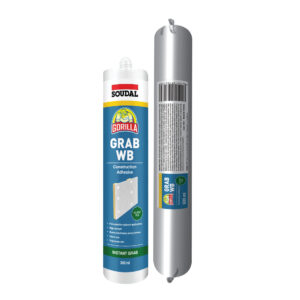
Gorilla Wallboard Adhesive
- 300ml 178931, 600ml 19317, white
- High initial grab
- Ideal for overhead use
- Solvent free formula
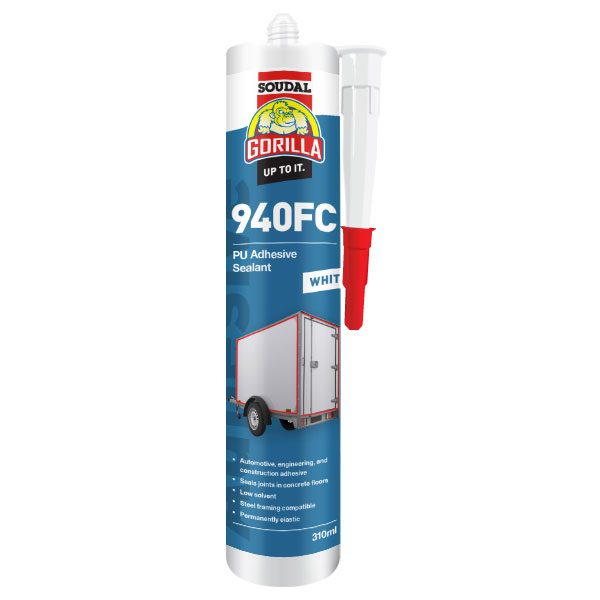
GORILLA 940FC PU
- 310ml, 600ml, multiple colours
- Quality PU sealant & adhesive
- Excellent adhesion
- Automotive, engineering and construction adhesive
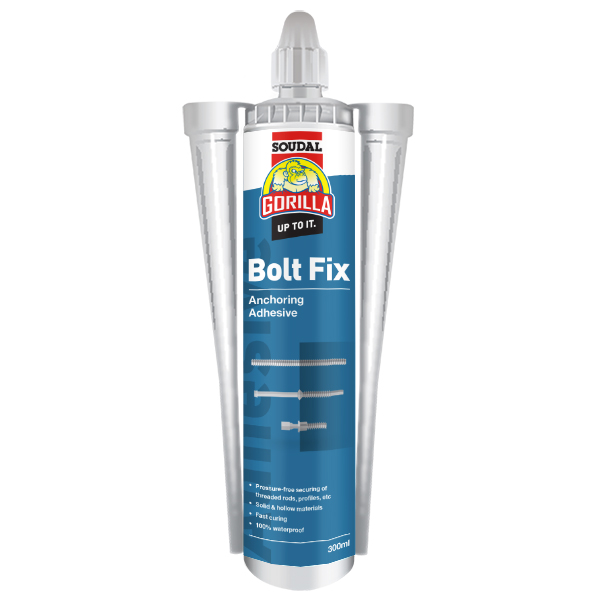
Gorilla Bolt Fix Anchoring Adhesive
- 300ml, grey, 21423
- Fast curing
- Use on solid & hollow materials
- Suitable for exterior applications
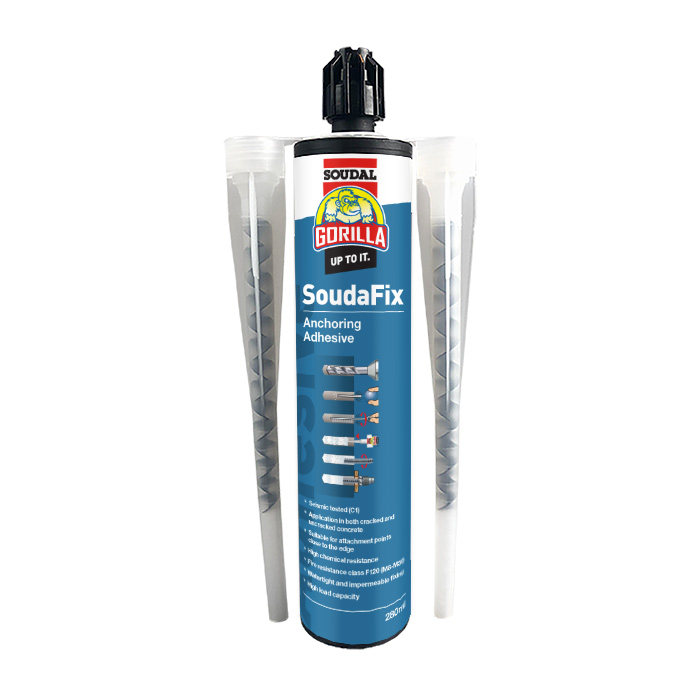
GORILLA SOUDAFIX ANCHORING ADHESIVE
- 280ml, grey, 20268
- Seismic tested (C1)
- Application in both cracked & uncracked concrete
- Suitable for attachment points close to the edge
- Great for vertical & overhead applications
- High load capacity
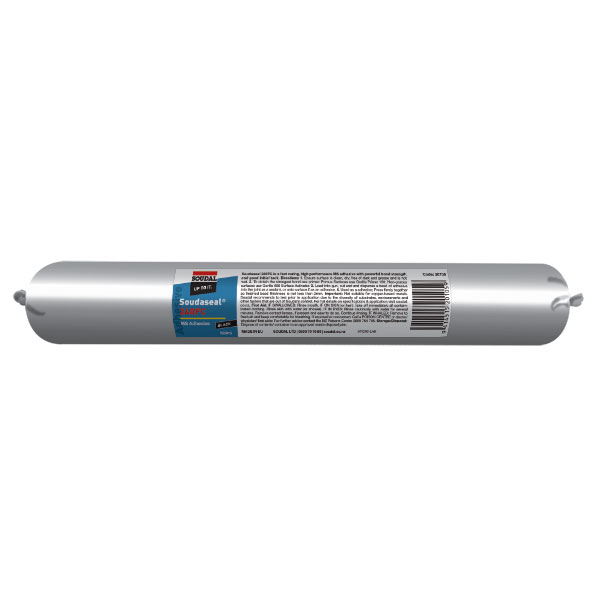
Soudal Soudaseal 240FC MS Adhesive
- 600ml, multiple colours
- Outstanding bond strength
- No odour
- VOC friendly
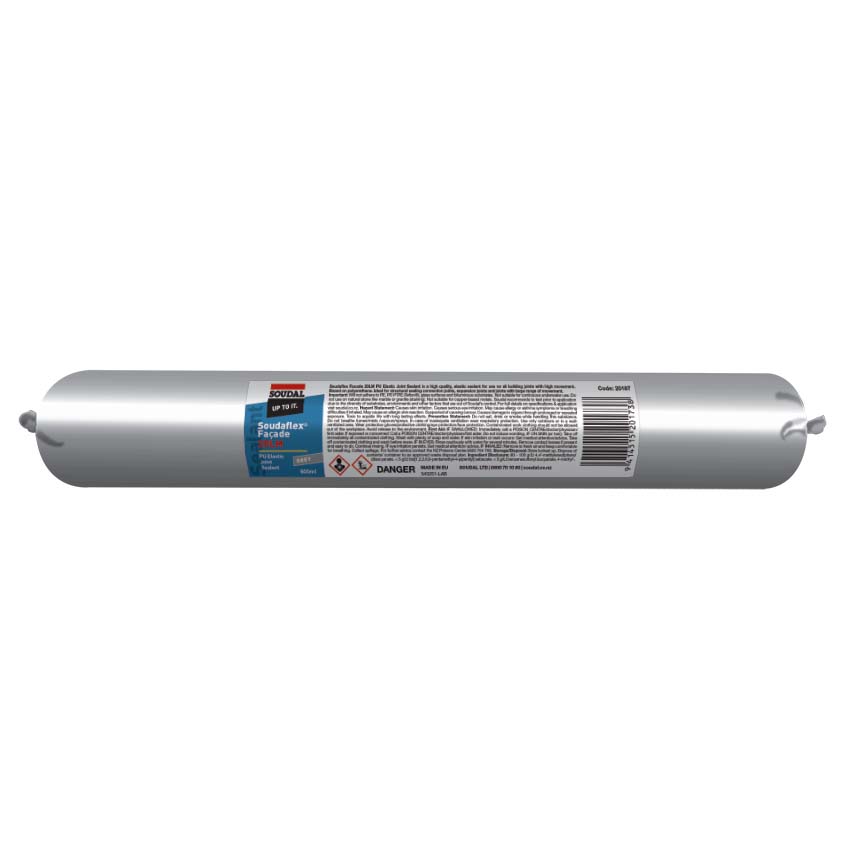
SOUDAL SOUDAFLEX FACADE 20LM JOINT SEALANT
- 600ml, Grey, 20173
- Permanently elastic after curing
- Very good adhesion to many materials
- Excellent resistance to UV radiation
How to choose the right construction adhesive
Construction adhesive selection depends on cure speed, substrate, load, and whether the fixing is structural.
Cure speed. Faster-curing grabs (10 minutes to 1 hour) suit trims, mouldings, and lighter fixing jobs where the piece needs to be handled sooner. Longer-cure formulations (1-2 hours) give more working and repositioning time on larger panels or awkward fits.
Substrate and surface. Wallboard and plasterboard fixing calls for a high initial grab adhesive rated for overhead use. Wet area linings such as acrylic shower panels, PVC, MDF, and ceramics need an adhesive tested against moisture and temperature cycling. Subfloor adhesive needs to bond to timber that may be damp, frozen, or otherwise imperfect on site.
Structural load and anchoring. Fixings that carry ongoing structural load, such as brackets, balustrades, or seismic restraint points, need a chemical anchoring adhesive tested for cracked and uncracked concrete, not a general-purpose grab adhesive.
Paintability and finish. Some grab adhesives are formulated to be paintable once cured, useful where the adhesive line may be visible in the finished job.
Technical differentiators
- Cure time: From 10 minutes to 2 hours for expanding PU grabs, with solvent-based grabs setting faster on contact
- Load type: General fixing versus structural anchoring, which requires seismic or engineering-rated products
- Substrate tolerance: Some subfloor and anchoring adhesives are rated for damp, frozen, or imperfect surfaces
- Format: Cartridge for general use, bulk cans for high-volume subfloor work
- Finish: Paintable options available where the adhesive line will be visible
Construction adhesive application guidance
Match the adhesive to the load path first: a decorative fixing only needs grab strength, while a structural anchor needs a tested chemical anchoring system with the correct hole preparation, cleaning, and cure time specified on the datasheet. For wallboard and overhead fixing, apply adhesive in the pattern specified on the datasheet and support the material until initial grab is reached. Subfloor adhesive should be applied to a clean surface, with allowance made for expansion in longer runs. For anchoring adhesives used near concrete edges or in seismic applications, always follow the tested embedment depth and edge distance for the rated load. See our skirting boards and decorative fixtures guide for trim-level fixing detail.
Not sure which construction adhesive suits the job? Use our product selector tool, download the product catalogue, contact us directly, or find your nearest stockist.
Construction adhesives FAQs
What's the difference between grab adhesive and construction adhesive?
“Grab adhesive” and “construction adhesive” are generally used interchangeably to describe adhesives that bond building materials with high initial hold. Within the category, products vary by cure speed, expansion behaviour, and whether they’re rated for structural anchoring versus general fixing.
How long does construction adhesive take to cure?
Cure times range from around 10 minutes to 2 hours for expanding PU grabs, with full strength typically reached within 24 hours. Faster-curing options suit smaller trims and mouldings, while longer-cure formulations give more time to reposition larger panels.
Can construction adhesive be used on subfloors?
Yes, a dedicated subfloor adhesive is formulated for structural subfloor bonding and can be applied to damp or frozen timber, unlike general-purpose grab adhesives.
Is construction adhesive suitable for anchoring into concrete?
General grab adhesives aren’t rated for structural anchoring. A chemical anchoring adhesive, tested for cracked and uncracked concrete and in some cases seismic rated, should be used for bolts, brackets, and other structural fixings.
Can construction adhesive be painted?
Some formulations are paintable once fully cured. Check the specific product’s technical datasheet to confirm paintability before finishing.