


Tapes
Tape from Soudal covers masking, surface protection, double-sided bonding, duct and cloth repair, and specialty jobs such as thread sealing and bond breaking. The range is built for trade and site use, with clean-removal masking tapes rated from 14 to 45 days. See our full Sealants and Adhesives ranges for complementary products, or browse Accessories for other site consumables.

GORILLA BUILDERS PVC TAPE
- Multi sizes & colours
- Water tight
- Moisture resistant
- Great for duct sealing, reinforcing & mending

GATOR DOUBLE SIDED FOAM TAPE
- Multi sizes, white
- Permanent
- Quick & easy to apply
- Great all purpose double-sided tape

GATOR SUPREME PVC TAPE 45 DAY
- 24mm x 55m, orange, 56124
- Super strong
- Water resistant
- Clean removal – 45 days no residue!

GATOR SURFACE PROTECTION
- 96mm x 50m, black, 56659
- High performance
- Clean removal
- Moisture, vapour, dirt & paint barrier

GORILLA GENERAL PURPOSE MASKING TAPE
- Multi sizes, white
- Great all purpose tape
- Easy to apply & remove
- Can be painted over
- Water resistant

GORILLA PAINT MASKER CLOTH WITH FILM
- Multiple sizes
- Designed for high build coatings
- 45 day clean removal
- Pre-taped film for fast & easy application

GATOR VHB DOUBLE SIDED FOAM
- Multi sizes
- Superior adhesion
- Excellent UV resistance
- Automotive, electronics & construction

GATOR CLOTH DUCT TAPE
- Multi sizes & colours
- Heavy duty cloth tape
- Water resistant
- Great for binding, repair jobs & reinforcing

GATOR VINYL MASKING TAPE
- 48mm x 50m, yellow, 56126
- Interior & exterior use
- Great for most surfaces
- Clean, trouble free removal

GORILLA GUARD TAPE
- Multi sizes, 66m length, black
- PE based tape
- No edge shrinkage
- Provides 6 month low residue adhesive

GATOR VHB ACRYLIC TAPE
- 12mm x 1mm x 33m, clear
- Superior adhesion
- High bond strength
- Used for common framing substrates

GORILLA THREAD SEAL TAPE
- 12mm x 10m 11703 & 12mm x 10m 24pk, white
- Great for sealing plumbing connections
- Prevents water leaking in joints

GATOR FOIL TAPE
- 48mm x 45m, foil, 56558
- Thermal conductivity
- Superior conformability
- Moisture & solvent resistance

GATOR ELECTRICAL INSULATION TAPE
- Multi sizes & colours
- Excellent comformability
- High elongation
- Agressive rubber resin coating

GATOR BOND BREAKER TAPE
- 12mm x 66m, blue , 56039
- Bond breaker for sealants
- Super strong PE based tape
- Excellent dirt and water resistance

HOLDFAST PLUMBERS HEMP
- 1m, brown, 01294
- Designed for metal & copper pipes
- Made of natural hemp

GORILLA PAINT MASKER CLOTH TAPE
- 50mm x 25m 56231
- No stretch
- Superior strength
- 45 day clean removal
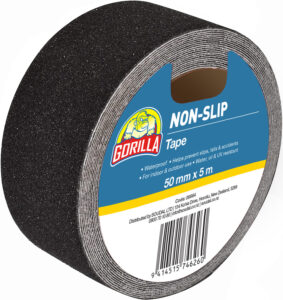
GORILLA NON-SLIP TAPE
- 50mm x 5m, black, 06664
- Water, oil & UV resistant
- For indoor & outdoor use
- Coarse grit tape for non-slip surfaces
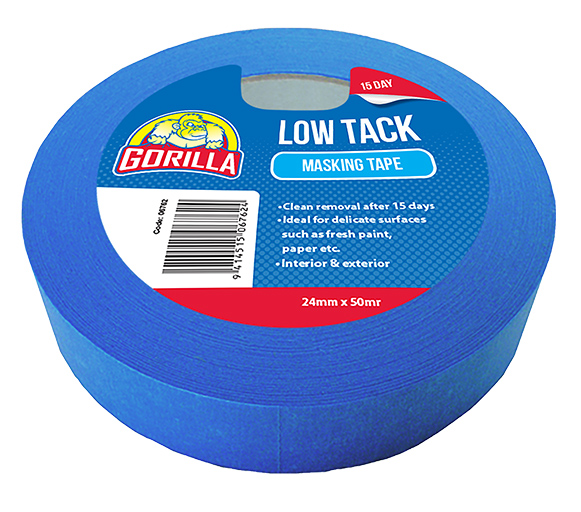
GORILLA LOW TACK MASKING TAPE
- 24mm x 50m, blue, 06762
- Clean removal after 15 days
- Ideal for delicate surfaces such as fresh paint, paper etc
- Interior and exterior
How to choose the right tape
Tape selection depends on the surface, how long it needs to stay in place, and whether it’s masking, protecting, or permanently bonding.
Masking for painting. General-purpose masking tape suits standard trim work and is paintable and water resistant. For delicate or freshly painted surfaces, a low-tack masking tape rated for longer dwell times (up to around 15 days) reduces the risk of pulling off the surface underneath. For high-build coatings or longer jobs, a cloth-backed paint masker tape with pre-taped film speeds up large-area masking and is rated for clean removal up to 60 days.
Surface and floor protection. A dedicated surface protection tape or film acts as a barrier against moisture, damage, dirt, and paint on finished surfaces during construction, and is designed for clean removal once the job is done.
Duct and repair work. PVC and cloth duct tapes are water-tight or water-resistant and suited to duct sealing, reinforcing, and general repair or binding jobs on site.
Permanent double-sided bonding. General-purpose double-sided foam tape suits everyday mounting jobs. High-bond VHB (very high bond) acrylic and foam tapes are rated for applications, including automotive assembly and framing substrates, where a permanent, adhesive-free-looking bond is needed.
Specialty and trade-specific tapes. Thread seal tape is used on plumbing connections to prevent leaks at threaded joints. Electrical insulation tape is rated for wrapping and insulating electrical connections. Bond breaker tape is applied behind a sealant bead to prevent three-sided adhesion in a joint, which otherwise restricts the sealant’s ability to move. Foil tape is used where thermal conductivity and moisture or solvent resistance are needed, such as ducting and insulation work. Foil tapes are often used as barrier tapes between two surfaces when there may be a chemical reaction between a base substrate and a sealant.
Anti-slip surfaces. A coarse-grit non-slip tape is rated for indoor and outdoor use where a walking surface needs extra grip.
Technical differentiators
- Removal window: Masking tapes range from around 14 days (vinyl) to 45 days (cloth-backed paint masker) for clean, residue-free removal
- Construction: PVC, cloth, foil, foam, and acrylic backings, each suited to different surfaces and durability needs
- Bond strength: The general purpose double-sided tapes and the high bond strength VHB type tapes are excellent for permanently supporting smooth backed construction materials.
- Water and moisture resistance: Most duct, surface protection, and outdoor tapes are rated water or moisture resistant; check the specific product for full waterproof ratings
- UV resistance: The UV rating for tapes is on the label and this generally refers to the ability for the tape to be removed without leaving an adhesive residue on the surface.
- Specialty function: Thread seal, electrical insulation, and bond breaker tapes serve a specific trade function rather than general masking or bonding
Tape application guidance
Apply masking and surface protection tape to a clean, dry surface for the best adhesion and cleanest removal, and remove within the tape’s stated time window to avoid adhesive residue or damage to the surface underneath. For double-sided and VHB tapes, clean and where necessary prime the substrate as specified on the datasheet, since bond strength depends heavily on surface preparation. Bond breaker tape should be applied to the base of a joint before the sealant is applied, so the sealant only bonds to the two sides of the joint, allowing it to move properly. Thread seal tape should be wound in the direction of the thread so it doesn’t unwind as the fitting is tightened.
Not sure which tape suits the job? Use our product selector tool, download the product catalogue, contact us directly, or find your nearest stockist.
Tapes FAQs
What's the difference between masking tape and painter's tape?
“Masking tape” and “painter’s tape” generally describe the same category of low-tack, clean-removal tape used before painting. Within the range, options vary by dwell time before clean removal, from around 15 days for delicate surfaces up to 60 days for high-build coating work.
How long can masking tape be left on before it damages paint?
This depends on the specific tape. Low-tack masking tape is generally rated for clean removal up to around 15 days, while cloth-backed paint masker tape is rated for around 60 days. Leaving tape down longer than its rated window increases the risk of residue or surface damage on removal. It should be noted that in placing the tape, the backing material (PVC, vinyl, PE, cloth) needs to be exposed to the any UV because UV will cause the adhesive layer to bond into the surface.
What is bond breaker tape used for?
Bond breaker tape is applied to the base of a sealant joint before the sealant is installed, stopping the sealant from bonding to the bottom of the joint. This allows the sealant to move properly with the joint rather than being restricted by three-sided adhesion.
Is Soudal duct tape waterproof?
PVC duct tape in the range is water-tight, while cloth duct tape is water resistant rather than fully waterproof. Check the specific product’s technical datasheet for the exact rating before use in wet or exterior conditions.