



Expanding Foams
Expanding foam from Soudal fills, seals, and insulates gaps around windows, doors, roofing, and penetrations, using one and two-component polyurethane systems in click-and-go cartridges, aerosols, and bulk spray formats. The range covers standard gap-filling foam, fire rated foam, isocyanate-free foam, and high-density foam, so the product matches the load and fire performance the gap actually needs rather than a single generic can.
Not sure which foam suits the gap, load, or fire rating needed? See our insulating application pages, or browse the full Sealants and Adhesives ranges for non-foam alternatives.
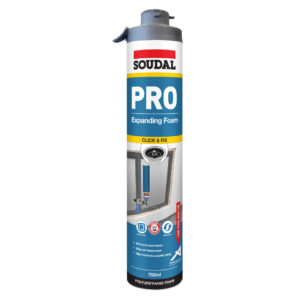
Soudal Pro Expanding Foam Click & Fix
- 750ml 175528, 750ml 3pk 131840
- BRANZ Appraised
- Expanding polyurethane foam
- Insulates and adheres
- Previously Gorilla Pro Expanding Foam Click & Fix
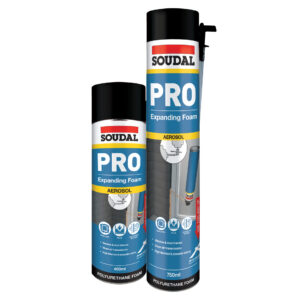
Soudal Pro Expanding Foam Aerosol
- 750ml 175591, 400ml 175523
- BRANZ Appraised
- Excellent adhesion
- High thermal & acoustic insulation
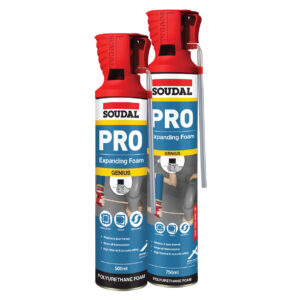
Soudal Pro Expanding Foam Genius
- 750ml 175527 & 500ml 175532
- BRANZ Appraised
- Re-useable for up to 6 weeks
- Revolutionary smart applicator gun
- Previously Gorilla Smart Expanding Foam
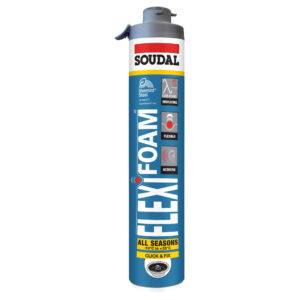
Soudal Flexi Expanding Foam Click & Fix
- 750ml, blue, 175597
- BRANZ Appraised
- Excellent adhesion
- High thermal & acoustic insulation
- Previously Gorilla Flexi Expanding Foam Click & Fix
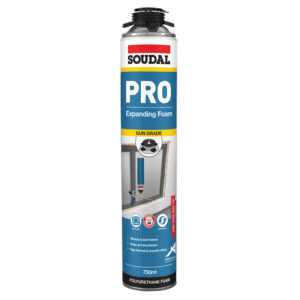
Soudal Pro Expanding Foam Gun Grade
- 750 ml, 175406
- BRANZ Appraised
- Expanding polyurethane foam
- Compatible with all standard foam guns
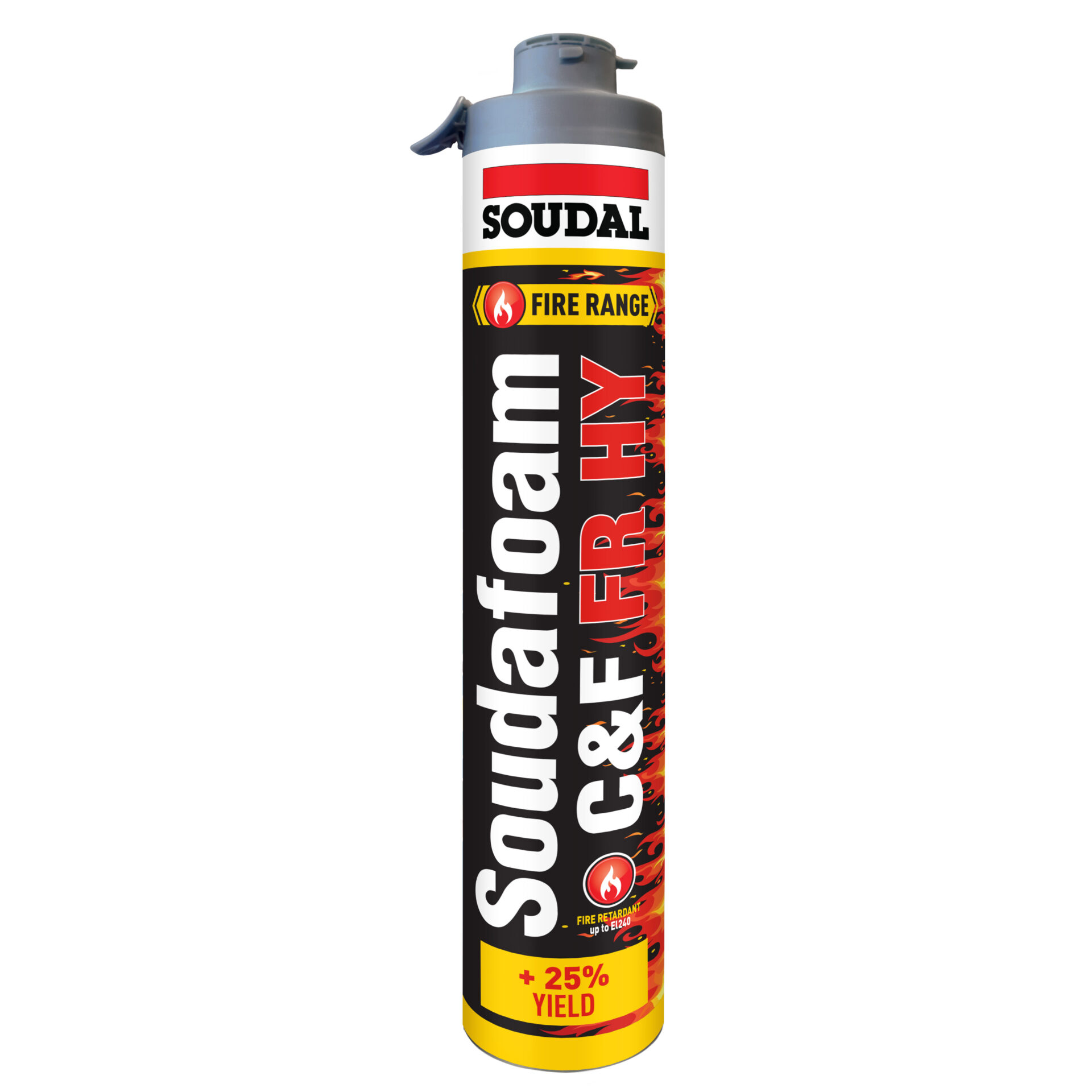
Soudal Soudafoam C&F FR HY
- 750ml, light red, 20160
- Fire retardant up to 240mins
- Strong seal against smoke & gas
- High bond strength
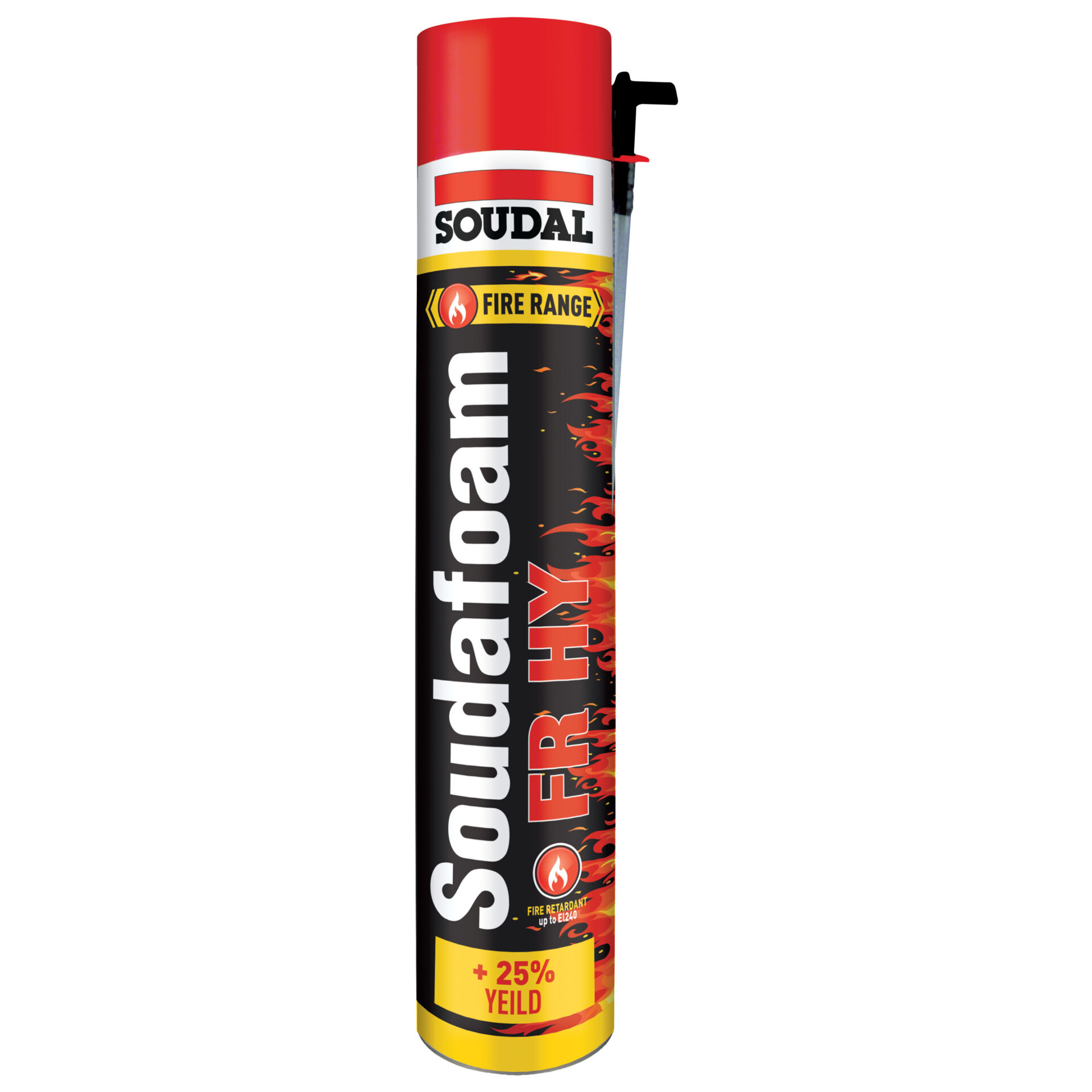
Soudal Soudafoam FR HY Aerosol
- 750ml, light red, 20169
- Fire retardant up to 240mins
- Strong seal against smoke & gas
- Excellent adhesion
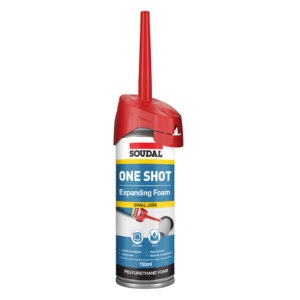
SOUDAL ONE SHOT FOAM
- 150ml 175596
- Great for small jobs
- Stops air transmission
- High precision filling in the tightest of spaces
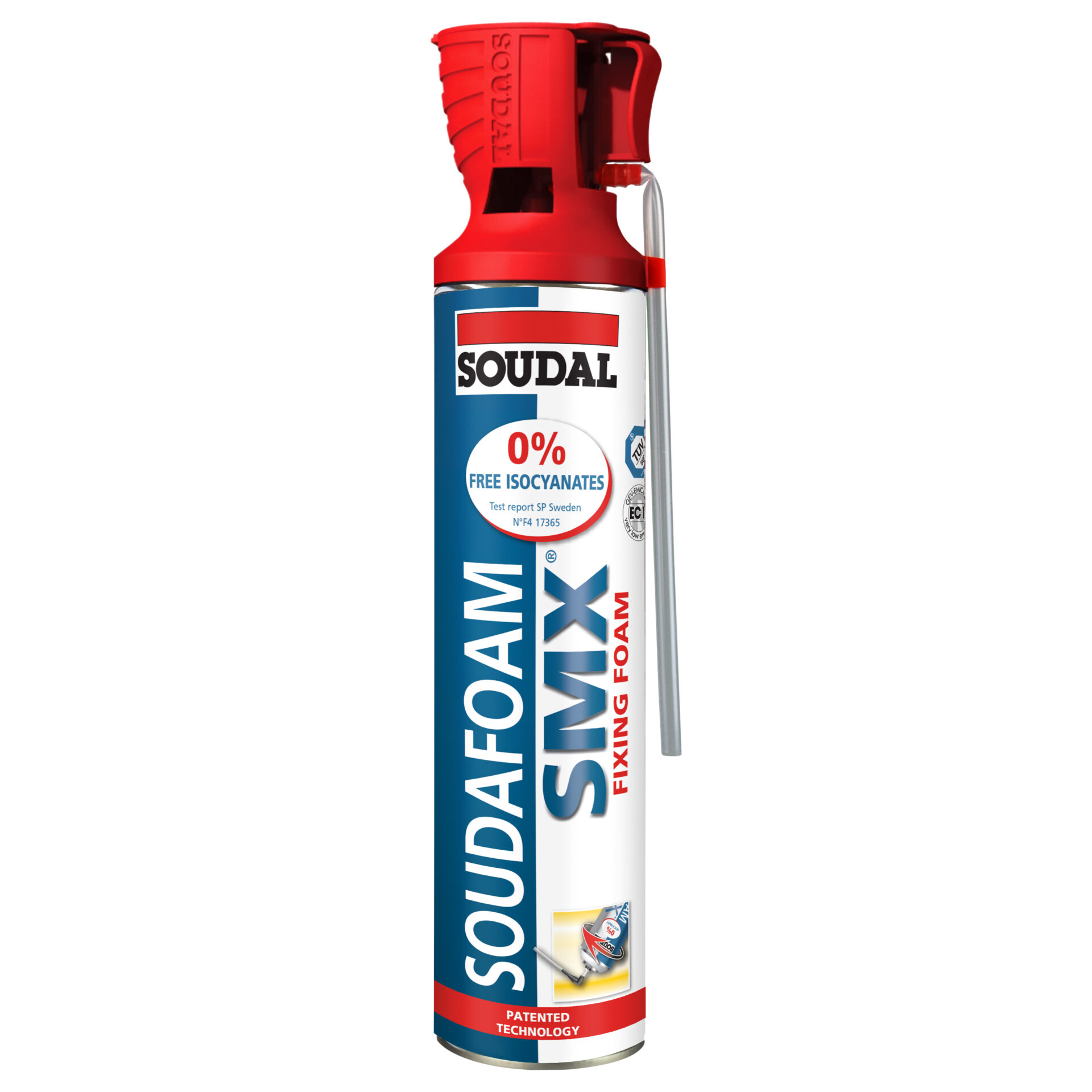
Soudafoam SMX Genius
- 500ml 20255
- Isocyanate free expanding foam
- Re-useable for up to 6 weeks
- Revolutionary smart applicator gun
- Previously Gorilla MS Foam
Soudal Foam Cleaner Click & Fix
- 500ml, 175531
- Cleans foam guns & nozzles
- Removes uncured foam
- Use after every can of foam
Soudal Expanding Foam Cleaner Gun Grade
- 500 ml, 175524
- Cleans foam guns &nozzles
- Removes uncured foam
- Compatible with all standard foam guns
Soudal Gun Grade Foam Gun
- Bluey Grey/silver, 175599
- Professional quality
- Accurate foam flow control
- Fitted with duravalve system to prevent gas loss
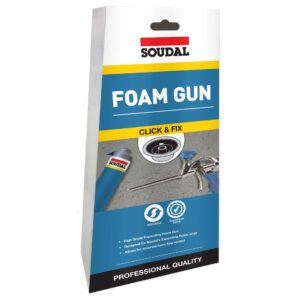
Soudal Foam Gun Click & Fix
- Black/silver, 175589
- Professional quality
- Accurate foam flow control
- European made
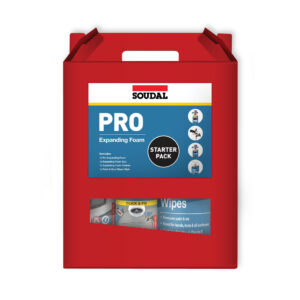
Soudal Pro Foam Starter pack
- Contains 4 Soudal products, 20089
- The ultimate Soudal Foam Starter Pack that covers all the foam bases from start to finish
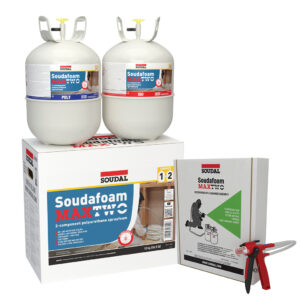
Soudafoam MAXTWO HFO
- 12kg, 146559 + accessories
- Fast expanding spray foam
- Creates an air & watertight seal
- No power source, pumps or extra pressure needed
- Designed for general insulation, filling, & sealing without structural load
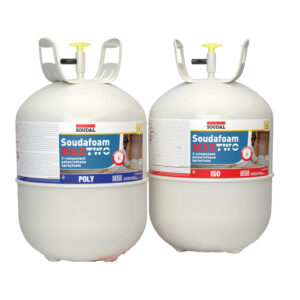
Soudafoam MAXTWO HFO XL
- 20.2kg ISO, 146557 + 19.8kg POLY, 146558 + accessories
- Fast expanding spray foam
- Creates an air & watertight seal
- No power source, pumps or extra pressure needed
- Designed for general insulation, filling, & sealing without structural load
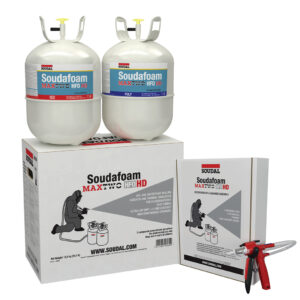
Soudafoam MAXTWO HD HFO
- 12kg, 145006 + accessories
- High density spray foam
- Provides strong compressive strength (~140 kPa) for load-bearing areas
- Designed for roof repairs, structural insulation, & heavy-duty sealing
How to choose the right expanding foam
Foam selection depends on the gap size, whether the joint requires fire performance requirements, and how the foam will be applied.
General gap filling and insulation. A standard one-component expanding polyurethane foam handles most window, door, and general construction gaps, expanding to fill irregular cavities and providing thermal and acoustic insulation once cured.
Fire-separating construction. A fire rated expanding foam is required anywhere the gap sits within a fire-rated wall or floor assembly, tested for fire retardance and smoke sealing rather than general insulation performance alone.
Isocyanate-sensitive environments. An isocyanate-free foam formulation is available for users who need to avoid isocyanate exposure, without giving up expansion and insulation performance.
Small or precision jobs. A low-expansion, precision-nozzle foam suits small penetrations and tight spaces where standard foam would over-expand or waste product.
Reusable, multi-job use. A smart-applicator foam format can be resealed and reused across multiple jobs over several weeks, useful for trades who don’t use a full can in one sitting.
Technical differentiators
- Expansion behaviour: Standard foam expands significantly to fill irregular gaps; low-expansion formats are suited to tight or precision spaces
- Fire performance: Standard foam has no fire rating
- Load capacity: Standard and fire rated foams are non-structural; high-density spray foam provides compressive strength
- Chemistry: Standard polyurethane foam versus isocyanate-free formulations for sensitive environments
- Format: Aerosol for small jobs, bulk two-component spray systems for large-scale insulation and sealing work
- Reusability: Applicator formats can be sealed and reused for several weeks; standard aerosol cans are single-use once opened
Expanding foam application guidance
Dampen the substrate lightly before application, since polyurethane foam cures using ambient moisture and a slightly damp surface improves cure and adhesion. Fill gaps no more than half to two-thirds full, depending on expanding foam type. PU construction foams expand significantly as they cure and overfilling may cause bowing or the need to trim excess waste. Use a foam gun for greater control and less waste on larger jobs, and clean the gun or nozzle after every can with a dedicated foam cleaner to prevent the valve from clogging with cured foam. The important part here is to turn off fully’ the variable flow rate control knob at the back of the gun when it is not in use. Allow the stated cure time before trimming, painting, or loading the foam, and check the product’s fire test report before use in any fire-rated assembly, since substituting an untested foam will void the fire rating. For window and door installation specifically, see our window installation guide, and for structural movement joints in the building envelope, see building envelope expansion joints.
Not sure which expanding foam suits the job? Use our product selector tool, download the product catalogue, contact us directly, or find your nearest stockist.
Expanding foams FAQs
What's the difference between expanding foam and fire rated foam?
Standard expanding foam is designed for general gap filling, thermal insulation, and acoustic insulation, with no tested fire performance. Fire rated foam is tested for passive fire protection, typically up to 240 minutes, and forms a seal against smoke and gas, required wherever the gap sits within a fire-rated wall or floor assembly.
Is expanding foam waterproof?
Cured polyurethane foam is generally water resistant rather than fully waterproof, and is not designed as a standalone weatherproofing layer. External gaps typically need a compatible sealant or flashing over the cured foam for full weatherproofing.
How long does expanding foam take to cure?
Surface skinning generally occurs within 10-20 minutes, with full cure reached within 24 hours, depending on gap depth, ambient temperature, and humidity. Foam should not be trimmed, loaded, or painted until fully cured.
What's the difference between expanding foam and fire rated foam?
Standard expanding foam is designed for general gap filling, thermal insulation, and acoustic insulation, with no tested fire performance. Fire rated foam is tested for passive fire protection, typically up to 240 minutes, and forms a seal against smoke and gas, required wherever the gap sits within a fire-rated wall or floor assembly.
Can expanding foam be used outdoors?
Yes, though cured foam should generally be protected from direct UV exposure once trimmed, since UV can degrade the cell structure over time. Check the specific product’s technical datasheet for exterior use guidance.