

Natural Stone Sealing
Key Takeaways:
- Use non-staining sealants specifically formulated for porous natural stone such as marble, granite, and sandstone.
- Prevent permanent marks by choosing neutral-curing silicones or SMX hybrid polymers that stop plasticizer migration.
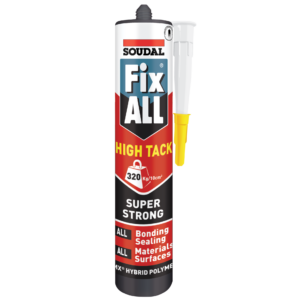
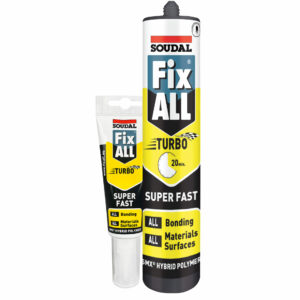
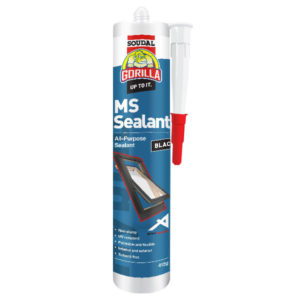
- Products like FixALL High Tack, Fix ALL Turbo, Gorilla MS, and Bathroom & Kitchen Sealant are suitable for both indoor and outdoor use.
- Soudal’s sealants are ISO 16938-1 tested for non-staining performance on sensitive stone surfaces.
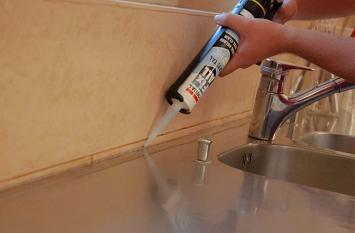
Sealing Joints in Natural Stone:
Natural stones such as sandstone, marble, and granite are widely used in floors, walls, bathrooms, and swimming pools due to their durability and appearance. However, these materials are naturally porous, meaning fluid substances can penetrate through tiny capillary channels and cause permanent staining. This can happen when silicone oils or plasticizers from unsuitable sealants migrate into the stone, resulting in visible marks that are almost impossible to remove.
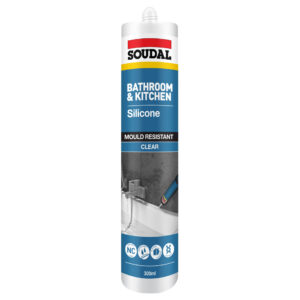
To avoid this, it’s crucial to use sealants designed for natural stone. Soudal’s range includes neutral-cure silicones and hybrid sealants that prevent staining and maintain a clean, professional finish. Fix ALL High Tack delivers excellent adhesion and UV resistance for exterior use, while Fix ALL Turbo provides a faster cure for quick applications. For flexible, all-purpose sealing on stone and tile, Gorilla MS offers a safe, non-staining bond and great flexibility. In wet environments like bathrooms or kitchens, Bathroom & Kitchen Sealant provides long-lasting protection against mould and moisture without damaging delicate surfaces.
International Standard Tests
There is an ISO (international standard) test for testing staining on natural stone: ISO 16938-1. This is the more critical test, ‘with compression’. ISO 16938-2 is the same test without compression. If a sealant passes the test it can claim to be non-staining on a specific type of natural stone.
We tested several of our sealants on Carrara marble and (Belgian) Blue stone, which are common and well known natural stones. For products specifically intended for use in contact with natural stone, this standard is also mentioned in the Technical Data Sheet: “Tested according to ISO 16938-1 (Testing for staining on natural stone by sealants). Silirub MA, Fix All Flexi and Soudaseal 240 FC are all tested according to this standard.”
FAQs
Why do some sealants stain natural stone?
Silicone oils and plasticizers can migrate into the stone’s pores, leaving dark or oily patches.
Which sealant is best for marble bathrooms?
Use Bathroom & Kitchen Sealant or FixALL Turbo, both are safe for marble and resist mould growth.
Can I use FixALL outdoors?
Yes, FixALL High Tack performs well in exterior joints and offers strong weather resistance.
How do I check if a sealant is stone-safe?
Look for “Tested according to ISO 16938-1” on the product’s technical data sheet.